Kidney disease and diabetes
- Home
- Learning Centre
- Kidney Health
- Kidney Disease and Diabetes

What is Diabetes?
Diabetes is a condition where blood glucose stays too high. It happens when the body:
- Can’t make enough insulin
- Or cannot use insulin properly
There are different types of diabetes the most common types being Type 1 and Type 2.
Where the cells that make insulin are damaged by antibodies, often triggered by a stress response and therefore unable to make the insulin required to maintain optimal blood glucose levels.
Affects around 85-90% of people living in Australia. It often runs in families but is largely preventable and manageable with diet, activity, and medicine.
Gestational diabetes
Which is caused by high glucose levels that present during pregnancy often because of hormones and other risk factors.
Mature onset diabetes of the Young (MODY)
Is an uncommon form of diabetes that develops before the age of 25 and is inherited through families due to a gene mutation.
Latent autoimmune diabetes in adults (LADA)
Can have the characteristics of both type 1 and 2 as the diabetes starts in adulthood and develops slowly, with antibodies destroying the cells that make insulin over a longer period of time.
Understanding Diabetes and Kidney Disease
Diabetes occurs when your blood glucose levels are too high.
Normally, after you eat, your body releases insulin to help move glucose from the food you eat into your cells for energy. But with diabetes, your body either doesn’t make enough insulin or can’t use it properly. This results in high levels of glucose in your blood.
Over time, high glucose levels caused by diabetes can damage the blood vessels in your kidneys. This then damages the tiny filters (nephrons) in your kidneys that clean your blood leading to Diabetic Kidney Disease (DKD) also called diabetic nephropathy.
Early detection is Key!
Diabetes is the leading cause of kidney failure, and 1 in 3 people with diabetes will develop Diabetic Kidney Disease. People with diabetes face a higher risk of blood pressure issues, nerve damage, and vision problems. Also, when kidney failure happens, people with diabetes can face a higher risk of complications.
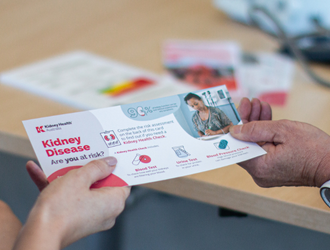
The best way to catch Diabetic Kidney Disease early is through regular Kidney Health Checks. If you have diabetes, an annual check is essential to help prevent further kidney damage and slow the progression of the disease.
That’s why it’s so important to:
- Get a Kidney Health Check every year
- Monitor your blood and urine for signs of kidney damage
Staying on top of these checks can help catch problems early and slow disease progression.
There are several factors that may increase your risk of developing Diabetes related kidney disease:
- Duration of Diabetes: The longer you’ve had diabetes, the higher your risk. Over time, suboptimal blood glucose levels can damage your kidneys.
- Family History: If you have a family history of high blood pressure or heart disease, your risk of DKD may be higher.
- Age: Kidney function naturally decreases with age. If you’re over 60 years old, or over 18 if you are First Nations Australian, your risk may be increased.
- If you are very overweight or obese
- Of certain ethnic groups including First Nations Peoples
If you’ve been diagnosed with diabetic kidney disease, you’re not alone and there are simple lifestyle changes you make take to continue living well:
- Eat a Balanced Diet: Focus on vegetables, fruits, whole grains, lean meats, and low-fat dairy.
- Drink Water: Water is best for your kidneys. Try to avoid sugary or high-salt drinks.
- Reduce Salt and Sugar: Limit your salt intake to less than 5g per day and avoid added sugars and processed foods.
- Stay Active: Aim for 30 minutes of activity most days. Even simple activities like walking or gardening are great choices.
- Maintain a Healthy Weight: If needed, work with your healthcare provider to manage your weight.
- Limit Alcohol: Stick to no more than two standard drinks per day.
- Quit Smoking: Smoking harms your kidneys. If you smoke, consider seeking support to quit.
Remember, working with your healthcare team can help you slow the progression of kidney disease and support you to stay healthy. If you need support in managing your diabetes, please ask your GP to refer you to a credentialed diabetes educator in your local area.
If you have Diabetic Kidney Disease, you may experience complications that could affect your overall health, including:
- Heart Disease: This includes heart attacks, strokes, and blocked blood vessels.
- Eye Problems (Retinopathy): Damage to the blood vessels in your eyes, which can affect your vision.
- Nerve Damage (Neuropathy): Can cause weakness, numbness or other issues in your body’s organs.
Remember
- Diabetic Kidney Disease (DKD) is kidney disease caused by diabetes.
- DKD is the most common cause of kidney failure.
- If you have diabetes, it’s important to have an annual Kidney Health Check.
- Lifestyle changes and treatment can help slow the progression of kidney disease and improve quality of life.
Managing Diabetes and Kidney Health
Remember, the same lifestyle changes that benefit your kidneys can also help manage your diabetes.
If you are living with diabetes, controlling your blood glucose levels (sometimes called blood sugar levels) is essential to preserving kidney function.
To reduce damage to your kidneys, focus on:
- Your blood glucose: Keep your blood glucose levels within the recommended target levels recommended by your treating doctor.
- Your fasting blood sugar levels between 6-8 mmol/L
- Your HbA1c under 7%
Please note: Target glucose levels can change according to your age and circumstances so always checking with your treating diabetes doctor
HbA1c is a common blood test used to diagnose or monitor diabetes.
It is also known as Glycosylated haemoglobin. It measures the amount of glucose (sugar) that has attached to haemoglobin, the part of your red blood cells that carry oxygen.
Because red blood cells live for around 2-3 months, the HbA1c test shows your average blood glucose level over that time.
This helps you and your healthcare team understand how well your blood glucose has been controlled and whether any changes to your treatment might be needed such as seeing a dietitian, exercise physiologist or start new medications.
Methods of controlling blood glucose start with engaging in healthy lifestyle practices, including physical activity and eating a healthy diet and then medicines if required.
Medications often prescribed for type 2 diabetes are:
- Metformin
- Sodium-glucose transporter 2 (SGLT2) inhibitors
- DPP-4 inhibitors
- Glucagon-like-peptide-1 receptor agonists/analogues.
- Insulin
Remember, the same lifestyle changes that benefit your kidneys can also help manage your diabetes.
Even small, consistent changes in your routine can have a big impact on how you feel and how well your kidney’s function
- Your Blood Pressure: Keeping your blood pressure in check can help prevent further kidney damage.
- Maintain a healthy weight for your height and age
- Regular Kidney Health Checks: Checks for protein in your urine can help you protect your kidney function.
- Healthy Cholesterol Levels: Managing your cholesterol levels is important for both kidney and heart health.
- Visit Diabetes Australia to learn more!

Would you also consider?