



Aboriginal and Torres Strait Islander Peoples

Healthy Kidneys

Kidney Health Australia acknowledges the Traditional Owners and Custodians of Country throughout Australia.

We honour their enduring connection to land, waters, skies, and community, and the wisdom, strength, and healing practices passed down through generations.

We pay our respects to Elders past and present and recognise emerging leaders who carry forward culture, knowledge, and a vision for strong, healthy communities.

Kidneys and your Health

Our First Nations peoples are living with much higher rates of kidney sickness. This is part of the ongoing impacts of colonisation on health, families, and communities.

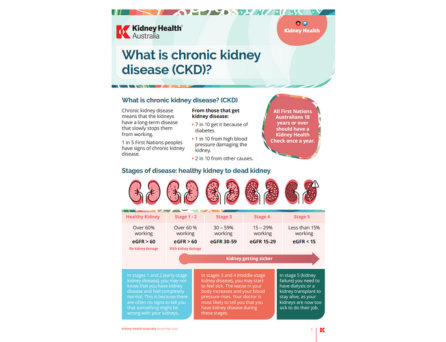
Your kidneys have an important job – they help keep your blood clean, control your blood pressure, make urine, and support strong bones and overall wellbeing. When kidneys become sick, waste builds up in the body, and this can lead to serious sickness or kidney failure.

Learning how to look after your kidneys can help keep you and your mob healthy.

Who needs a Kidney Health Check?

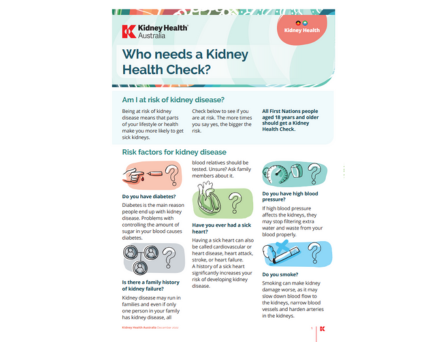
Am I at risk of kidney disease?


Being at risk of kidney disease means that parts of your lifestyle or health make you more likely to get sick kidneys.

All First Nations people aged 18 years and older should get a Kidney Health Check.

What is a Kidney Health Check?


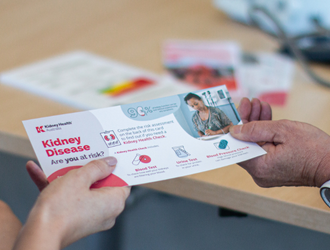
A Kidney Health Check is a simple way to check if your kidneys are sick. You can get one at your local ACCHO, GP, or community health service.

A Kidney Health Check, includes a urine (wee) test, a blood pressure check and a blood test

How often should I get a Kidney Health Check?

A Kidney Health Check should be done every year as part of your annual 715 health check.

All First Nations peoples aged 18 years and older should get a Kidney Health Check once a year.

If you have been told that you have chronic kidney disease, you will need more checks. This is to see if you need treatment for kidney damage.

Things to Remember:


• A Kidney Health Check is a simple check that can be done at your local ACCHO, GP, community health service.

• A Kidney Health Check includes a blood test, urine test and blood pressure check.

• All First Nations peoples aged 18 years and older should get a Kidney Health Check once a year.

What do kidneys do?

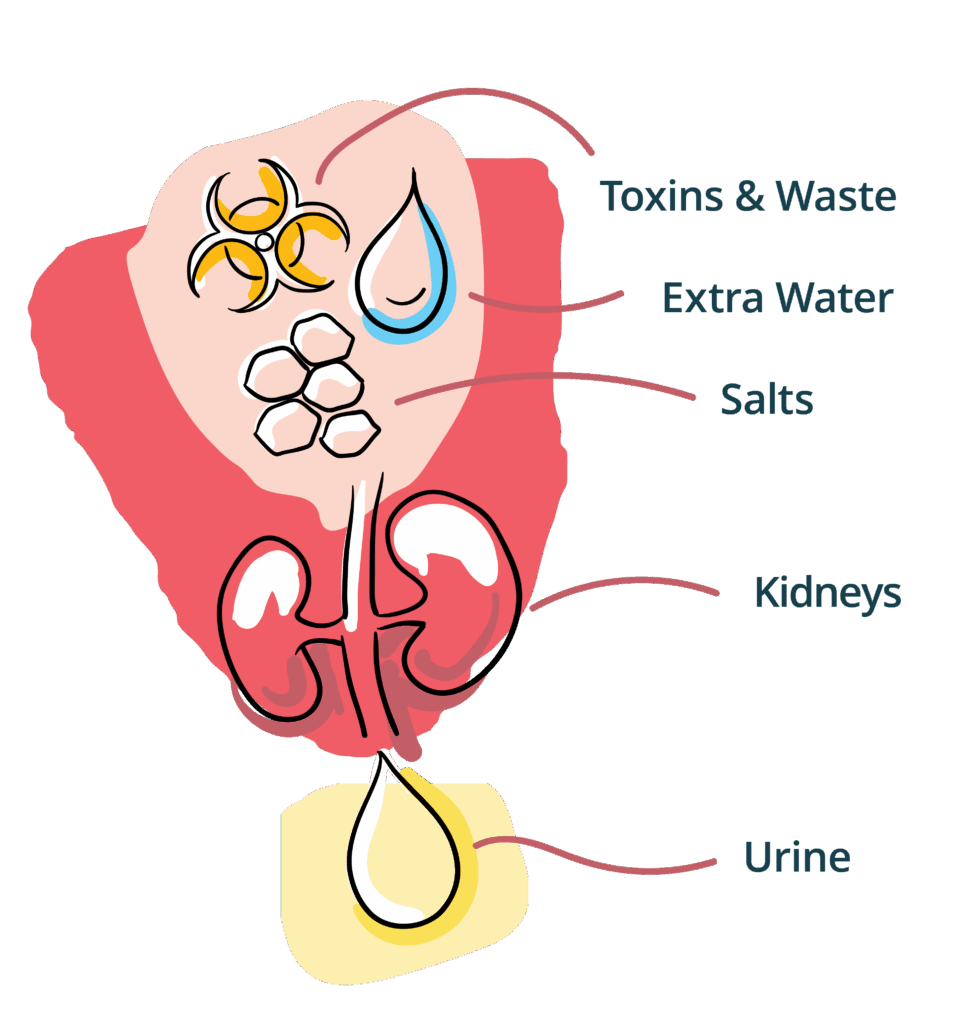
You have two kidneys that are busy working 24 hours a day to clean your blood. They filter out toxins, salts and extra water, which leave your body when you wee.

Each kidney is about the size of your fist and shaped like a bean. You can live quite well with only one kidney. If both of your kidneys stop working, you need to have dialysis or a kidney transplant to stay alive.

Dialysis means that a machine helps to clean your blood. Having a kidney transplant means that you get a healthy kidney from someone else. The kidneys play a huge role in keeping you healthy.

Preventing Kidney Disease

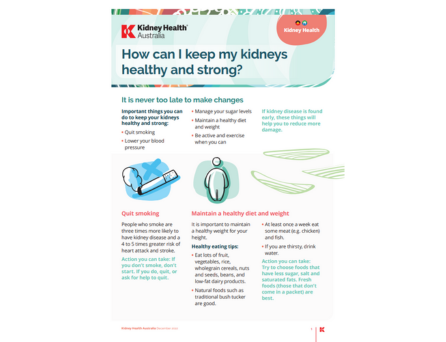
Living a healthy lifestyle is good for kidney health. Eating well, exercising, controlling blood pressure, and avoiding smoking reduce your risk of developing kidney problems.

Early detection through check-ups allows you to address risks before they become big. Small lifestyle changes can make a big difference in keeping your kidneys healthy for years to come.

Actions you can take

Smoking or chewing tobacco or using ash is a sure way to increase your risk of kidney disease.

If you don’t smoke, don’t start!

If you do, ask your health clinic to put you on a quit program to help you stop.

When you are thirsty, drink water. It costs nothing and has no calories, and while it’s fixing your thirst it’s also cleaning your body on the inside.

There are safer and less safe levels of drinking for all Australians. For healthy adults, the Department of Health says:

  • To reduce the risk of harm from alcohol-related disease or injury for healthy men and women, drink no more than 10 standard drinks per week and no more than 4 standard drinks on any one day.
  • The less you choose to drink, the lower your risk of alcohol-related harm. For some people, not drinking at all is the safest option.

Sugary soft drinks and some fruit juices can make you put on weight quickly.

Drinking water instead helps keep your body and your kidneys healthy.

Natural foods like fresh fruit and vegetables and bush tucker are the healthiest. You’ll have more energy to enjoy life, and they taste good too.

Choose foods with low levels of sugar, salt and saturated fats.

That means avoiding fast foods, fried foods, take-away and junk food.

Home cooking most of the time is best. This helps to keep your weight down, and that means it’s good for your kidneys.

Flavour your food with herbs for healthy kidneys

Using herbs instead of salt helps keep your blood pressure at a healthy level. Healthy blood pressure is good for your heart, your kidneys, and your whole body.

At your ACCHO, GP, or community health service, there’s a team of Aboriginal Health workers and specialists who are there to help you stay healthy.

Ask them how you can keep your kidneys stronger for longer.

You can also reach out to Aboriginal Health liaison officers (AHLO’s), allied health workers, SEWB workers, your mob and Elders and other community support to help keep you healthy.

Explore your resources

You have two kidneys that are busy working 24 hours a day to clean your blood.

Chronic kidney disease is called a ‘silent disease’ because people only feel sick when their kidneys have nearly stopped working.

Being at risk of kidney disease means that parts of your lifestyle or health make you more likely to get sick kidneys.

Would you also consider?

Create a free account

Join today for personalised learning, helpful resources, and wellbeing support.

Join today
Already have an account? Log in here