




Checking for Kidney Disease
- Home
- Learning Centre
- Kidney Health
- Checking for Kidney Disease
Checking if you're at risk of
Kidney Disease?
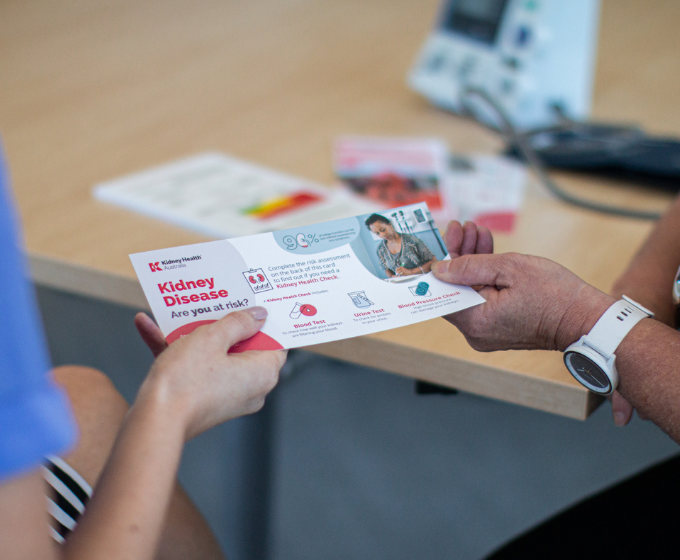
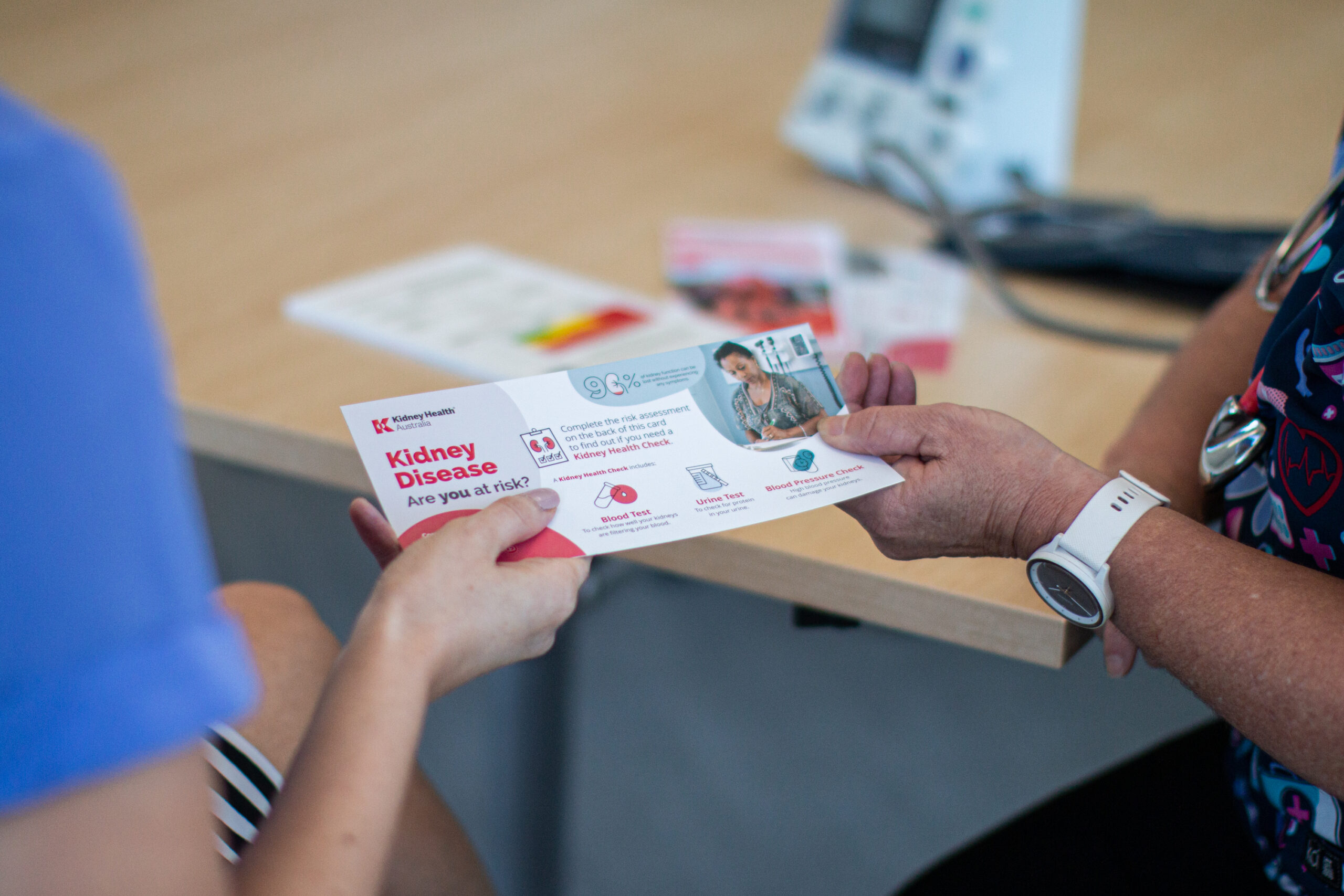
The best way to detect Kidney Disease is by getting a Kidney Health Check.
Kidney Health Checks are quick and easy and can be done as part of regular visits to the GP or health clinic.
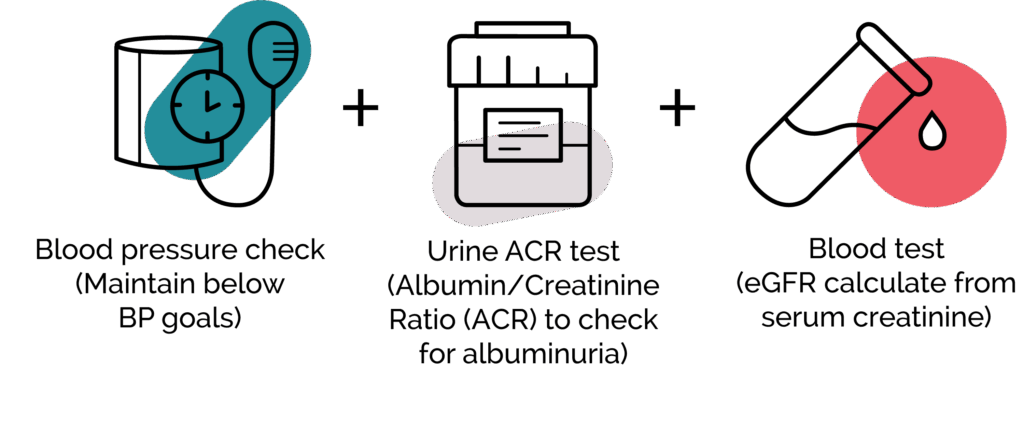
They involve a blood pressure check, urine test, and a blood test.
What's Included in a Kidney Health Check
Your doctor will check your blood pressure. High blood pressure can hurt your kidneys and is often a sign your kidneys aren't working as well as they should. We’ll learn more about this in an upcoming lesson!
A blood test measures our kidneys filtration rate which is called the ‘estimated Glomerular Filtration Rate’ or ‘eGFR’. This rate shows how well kidneys are filtering our blood by measuring the amount of waste left in it. The waste product measured is called ‘creatinine’.
Lastly, a urine test looks for blood or a protein called ‘Albumin’ in your urine, which can be a sign of kidney damage.
If you haven’t had a kidney health check, this 2-minute test can help see if you’re at risk of kidney disease: Click on the “Take the risk test” button.
A Kidney Health Check involves three straightforward tests
Who should get a kidney health check?
You should have a Kidney Health Check once a year if you:
- Have diabetes
- Have high blood pressure
- Are First Nations Australian aged 18 years and over
You should have a Kidney Health Check every two years if you:
- Are a current or past smoker/vaper
- Are very overweight or obese
- Had a stroke, heart attack or have heart failure
- Have a family history of kidney failure, dialysis or kidney transplant
- Have a history of acute kidney injury
- Are over 60 years of age
It is also important to note people who have none of the risk factors above may also develop kidney disease.
Understanding Your Results
Once your tests are completed, your doctor will explain what they mean for your kidney health. If any signs of issues are found, early steps can be taken to manage or slow the progression of kidney disease.
Knowing your results helps you make informed decisions about your health. It also allows you to work with your healthcare team to develop a personalised plan to protect your kidneys and overall well-being.
Why Kidney Health Checks Matter
Preventing Kidney Disease
Living a healthy lifestyle is essential for kidney health.
Eating well, exercising regularly, controlling blood pressure, and avoiding smoking reduce your risk of developing kidney problems.
Early detection through regular check-ups allows you to address potential risks before they become serious. Small lifestyle changes can make a big difference in maintaining healthy kidneys for years to come.