This is a medical condition happens when your body does not have enough red blood cells. Learn more about the symptoms of anaemia and what you can do to get the treatment you need.
What you need to know:
Your kidneys help make a hormone called erythropoietin (EPO). EPO tells your body to make more red blood cells. These red blood cells help to carry oxygen from the lungs to other parts of the body.
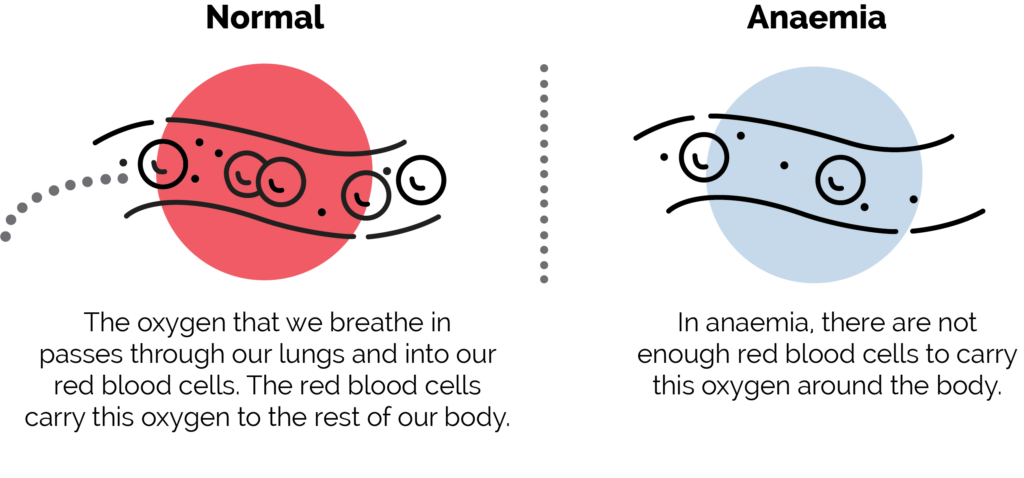
Without enough red blood cells, your important muscles may not get enough oxygen. This can cause you to feel tired and low in energy.
Because anaemia is so common in CKD, it’s important to be aware of the symptoms. Symptoms of anaemia are:






Some people with anaemia may not have symptoms while others may feel generally unwell. These symptoms can make it difficult to enjoy life, but treatment can help!
Walkthrough: Why testing and treatment matters?
If you have any symptoms of anaemia, talk to your GP about getting tested. Your doctor will ask about your medical history and do a physical exam. Anaemia is confirmed with a blood test.
It’s important to seek treatment if you have anaemia. People with CKD who have untreated anaemia have a greater risk to their health and may have more hospitalisations. Treatments for anaemia include:
- Iron supplements or infusions
- Medicines to increase EPO, called erythropoiesis-stimulating agents
- Blood transfusions to give you more red blood cells
Support:
- Need more help? Join Kidney Health 4 Life and review courses on living with CKD.
- Still have questions? Call the Kidney Health 4 Life team: 1800 454 363 (Mon to Fri, 9am to 5pm AEST).
Key takeaways
- Anaemia is common with CKD and can cause symptoms like tiredness, dizziness, and pale skin.
- Tell your doctor if you are experiencing symptoms of anaemia. Treatments can help you feel better.
What’s next:
- Find out ways to take care of your health and wellbeing with kidney disease: Wellbeing Centre | Kidney Health 4 Life
- Download our Factsheet “Anaemia and CKD” (Anaemia & CKD factsheet – Kidney Health Australia)
Sources:
Anaemia and CKD factsheet
Last updated 16 April 2026